
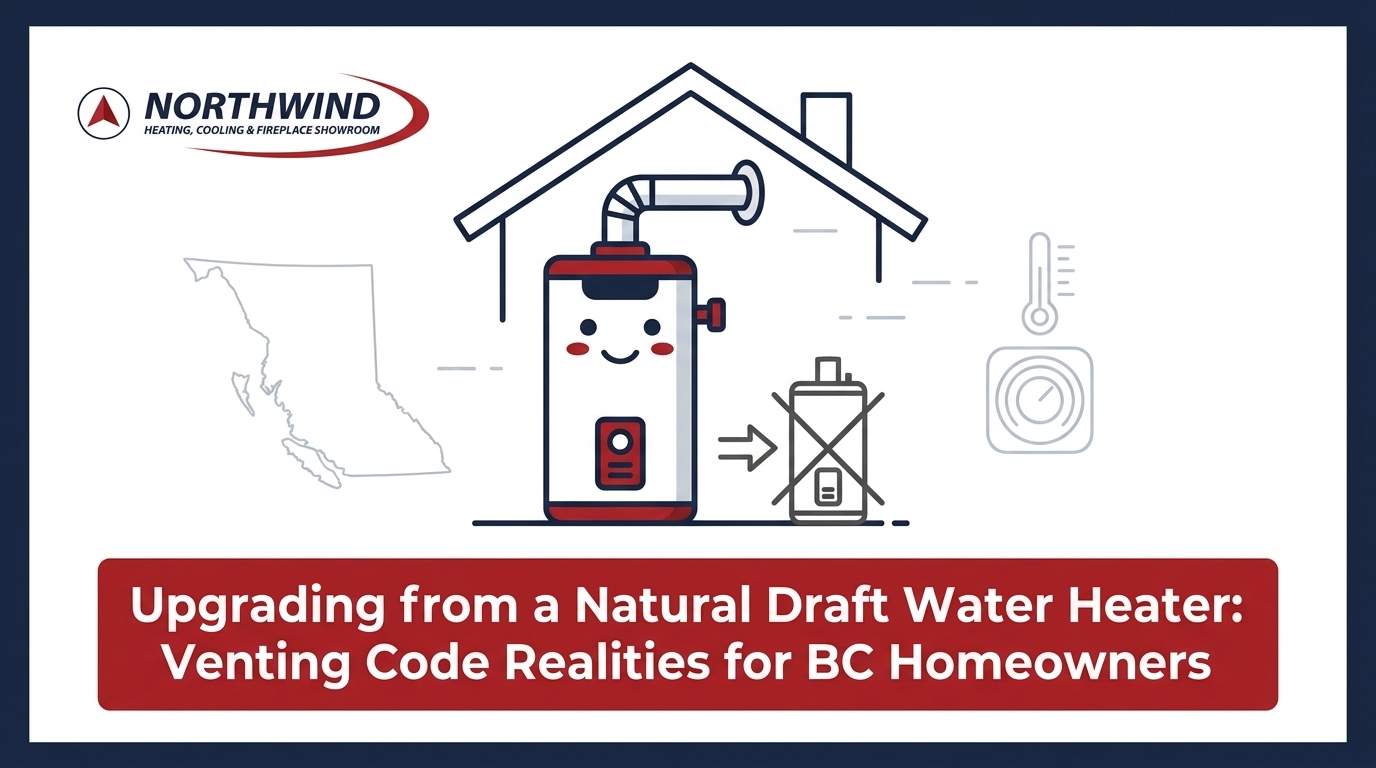
Upgrading from a Natural Draft Water Heater: Venting Code Realities for BC Homeowners
Replacing an old tank with a high-efficiency model often requires drilling for new PVC exhaust pipes. Understand why these strict safety mandates are required before approving your quote.
The Surprise at the Quote: Why Your Upgrade Requires New Venting
If you are researching Upgrading from a Natural Draft Water Heater: Venting Code Realities for BC Homeowners, you will quickly learn that what seems like a straightforward replacement often turns into a more complex project. You call for a standard swap, expecting the old tank to roll out and the new one to slide right in. But when the quote arrives, you notice unexpected line items: drilling through an exterior wall, running new PVC pipes, and decommissioning the old metal chimney. This is a common frustration our team at Northwind Heating, Cooling & Fireplace Showroom hears from Surrey homeowners who just want their hot water back online quickly. The truth is, installing a modern high-efficiency condensing water heater changes the entire mechanical equation of your home.
These new venting requirements are not arbitrary contractor upcharges or unnecessary add-ons. They are strict, legally binding life-safety mandates designed to protect your property and your family from serious hazards. Before you sign off on any work, understanding the science and the regulations behind the upgrade is critical. If you are exploring upgrades for your home's heating systems, knowing how modern exhaust codes function ensures you make the safest, most informed choice for your property.
The Evolution of Water Heating: Natural Draft vs. High-Efficiency
To understand why new pipes are required, we often explain to our customers how water heating technology has fundamentally changed over the last few decades. The shift in efficiency mirrors other major home upgrades, such as a heat pump installation, which often requires updated infrastructure to support advanced technology.
How Older Natural Draft Systems Worked
Older water heaters operated on a very simple physical principle: hot air rises. When the gas burner ignited to heat the water, it produced incredibly hot exhaust gases. Because these gases were so hot, they naturally drafted upward, carrying combustion byproducts straight up a metal B-vent or a masonry chimney and out of the house.
• High heat waste: A significant amount of the thermal energy created by the burner went straight up the chimney rather than into your water.
• Natural updraft: The extreme heat created a strong, reliable draft without the need for mechanical fans.
• Moisture prevention: Because the exhaust was so hot, any water vapor in the combustion gases stayed in a gaseous state until it safely exited the chimney.
The Shift to Condensing Technology
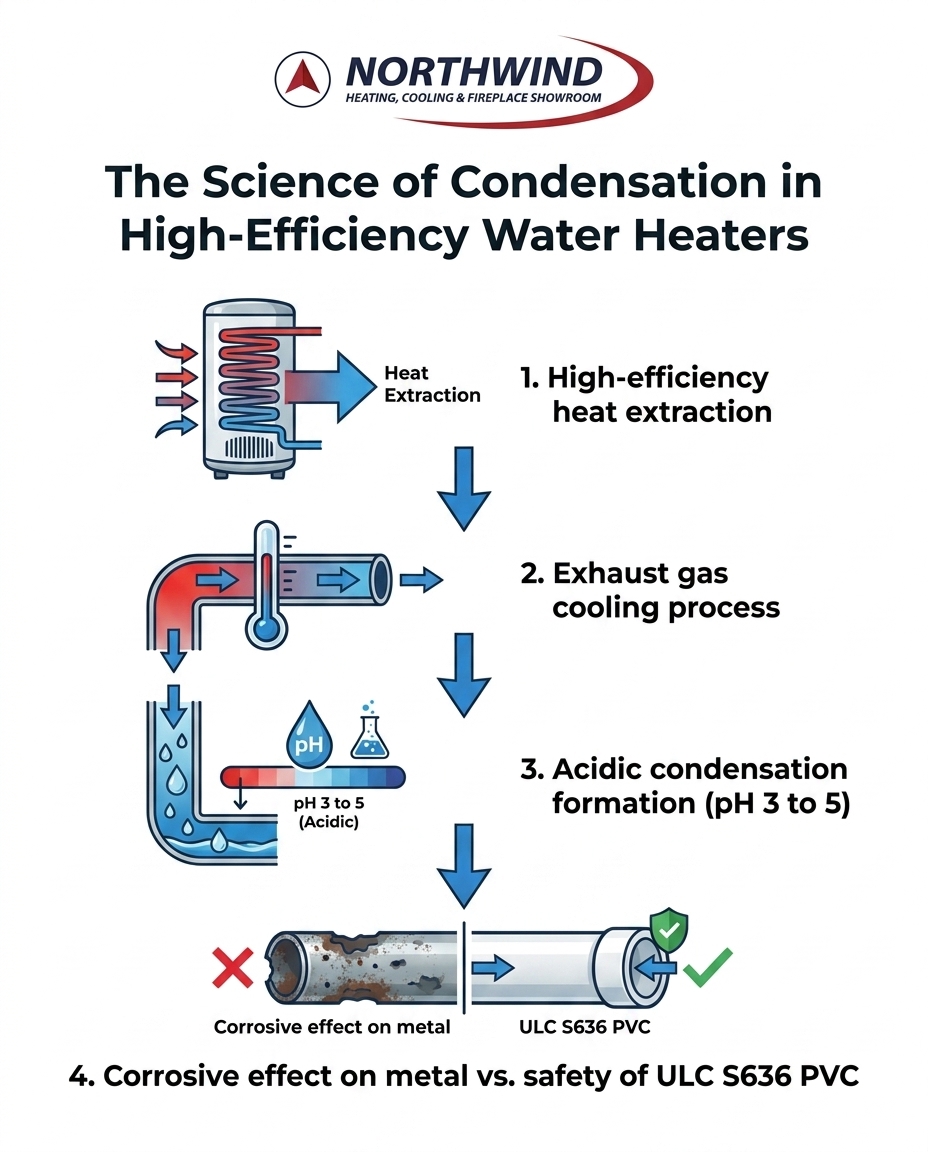
Modern engineering has prioritized energy conservation. A high-efficiency condensing water heater is specifically designed to trap and utilize the heat that older models used to waste. By routing the exhaust gases through a secondary heat exchanger, the system extracts almost all of the thermal energy and transfers it into your water supply.
The result is a highly efficient appliance, but it comes with a physical tradeoff. Because so much heat is kept inside the tank, the resulting exhaust gases are much cooler than those produced by older models. This cooler exhaust lacks the thermal energy required to naturally draft up a vertical chimney. Instead, the system requires mechanical assistance—a power venting fan—to actively push the exhaust gases horizontally out of the building.
• Exhaust Temperature — Natural Draft Water Heater: Very high (prevents condensation) — High-Efficiency Condensing Unit: Very low (causes condensation)
• Venting Method — Natural Draft Water Heater: Vertical metal B-vent or masonry chimney — High-Efficiency Condensing Unit: Horizontal or vertical ULC S636 PVC pipe
• Draft Mechanism — Natural Draft Water Heater: Passive (hot air rises naturally) — High-Efficiency Condensing Unit: Active (mechanical fan pushes exhaust)
• Energy Efficiency — Natural Draft Water Heater: Standard (wastes heat through exhaust) — High-Efficiency Condensing Unit: High (extracts maximum heat for water)
The Science of Acidic Exhaust: Why Metal Vents Fail
The requirement for new venting is not just about the temperature of the exhaust; it is about the physical state of the byproducts. Understanding the physical science of condensation explains exactly why older chimneys are no longer safe to use.
Heat Extraction and Condensation
When you burn natural gas, the two primary byproducts are carbon dioxide and water vapor. In an older, hotter system, that water vapor stays a gas. However, in a high-efficiency system, the exhaust gases are cooled significantly before they leave the unit. As these cooler gases travel through the vent pipe, they drop below their dew point. The physics of cooling gases dictate that they will turn into liquid moisture. Therefore, high efficiency directly equates to high moisture levels in the exhaust stream.
The pH Problem: Corrosive Exhaust
The chemical reality: The condensation produced by a high-efficiency gas appliance is not pure water. It is a highly acidic liquid, typically registering a pH between 3 and 5. For context, this is similar to the acidity of tomato juice or black coffee.
If you were to route this acidic condensation up a standard galvanized steel B-vent or an older masonry chimney, the results would be disastrous. The acid rapidly eats through traditional metal and degrades masonry mortar. Over a relatively short period, the vent pipe will corrode and develop holes. This presents a severe life-safety risk: corroded metal vents can leak dangerous, odorless carbon monoxide directly into the living spaces of your home. Specialized plastic venting is uniquely suited to resist this chemical corrosion, keeping the exhaust safely contained.
Navigating BC Building Codes and Venting Standards
To prevent the dangers of acidic corrosion and carbon monoxide exposure, regulatory bodies have established strict installation rules. Translating these bureaucratic codes into understandable safety standards helps clarify why your installation quote looks the way it does.
The CSA B149.1 Installation Code Explained
In British Columbia, all gas appliance venting is governed by the CSA B149.1 Natural Gas and Propane Installation Code. This is the overarching regulatory framework for gas safety across Canada. Local BC municipal inspectors enforce these standards rigorously on all new installations, which is why our installers strictly adhere to them. The code explicitly dictates that you cannot mix and match venting materials, nor can you vent a modern condensing appliance into a chimney designed for a natural draft unit.
ULC S636 Certified PVC Requirements
When your quote specifies new PVC pipes, it is not referring to standard plumbing PVC—the kind you might find under your kitchen sink. The code mandates the use of ULC S636 certified PVC or CPVC piping for venting high-efficiency gas appliances.
• Temperature resilience: ULC S636 materials undergo rigorous testing to ensure they will not warp, melt, or off-gas when exposed to exhaust temperatures.
• Pressure ratings: Because the exhaust is pushed out by a fan, the pipe must be rated to handle positive pressure without leaking at the joints.
• Corrosion resistance: The certified plastic is chemically inert to the acidic condensation produced by the water heater.
Adhering to Technical Safety BC standards is not an annoyance; it is a critical life-safety necessity executed flawlessly by certified technicians to protect your home. Attempting DIY modifications to gas venting is illegal, highly dangerous, and will void your homeowner's insurance.
The "Orphaned" Appliance Dilemma
A common complication arises when you upgrade one system but leave another behind. This is a pattern we see often in homes with shared chimneys, leading to what the industry calls an "orphaned" appliance.
Shared Venting and Drafting Failures
Historically, it was common practice to vent both a natural draft furnace and a natural draft water heater into the same large masonry chimney or metal flue. The combined heat from both appliances created a powerful updraft that safely carried all exhaust outside.
The drafting failure: If you upgrade your heating system to new gas furnace designs that use high-efficiency PVC venting, the old natural draft water heater is left alone in the original chimney. This creates an "orphaned" water heater. The large chimney is now vastly oversized for the small volume of exhaust produced by the water heater alone. Without the furnace's heat to help establish a strong draft, the water heater's exhaust can stall, cool down, and spill backward into your basement or utility room.
Because of this risk, upgrading one appliance often forces homeowners to upgrade their water heater venting or replace the unit itself simultaneously to maintain safety. One Surrey homeowner our team recently helped faced a similar situation requiring a hot water tank replacement alongside a necessary gas line extension. Because the integration involved modifying existing gas infrastructure and shared venting, our professional assessment was critical. Our technicians completed both the hot water tank replacement and the gas line extension professionally and on time, ensuring the entire mechanical room met modern codes.
Climate Impact: Why Surrey Winters Increase Venting Demands
Regional climate plays a surprisingly large role in how your plumbing and heating systems operate. The environmental conditions we experience in Surrey, BC, make proper venting for high-efficiency units particularly critical.
During our cold, damp winters, our team notices that municipal groundwater temperatures drop significantly. When water enters your home from the city main in January, it is substantially colder than it is in July. This colder incoming water forces your water heater to work much harder and run for longer cycles just to reach your desired set temperature. Just as extreme cold can stress other mechanical components—sometimes leading you to wonder why your furnace makes a loud banging noise on startup—it also maximizes the workload on your hot water system.
The condensation effect: Longer running cycles mean the burner is operating for extended periods, which directly results in the production of higher volumes of acidic exhaust condensation. If your venting is not perfectly sealed and sloped, this increased winter moisture load can pool, leak, or cause rapid structural damage. Robust, ULC S636 certified PVC venting is absolutely essential to handle the heavy demands of a Pacific Northwest winter safely.
What to Expect During Your Professional Installation
Understanding that drilling for new PVC is standard industry practice can help alleviate the stress of a major home project. Here is how a professional, code-compliant installation typically unfolds when Northwind Heating, Cooling & Fireplace Showroom technicians arrive at your home.
Routing New PVC Through Walls or Roofs
1. Path Assessment: Technicians first determine the shortest, safest path from the new water heater to the exterior of your home. This minimizes the length of the vent run and reduces strain on the power vent motor.
2. Core Drilling: A precise hole is drilled through the exterior wall (or occasionally the roof, depending on the home layout) to accommodate the intake and exhaust pipes.
3. Proper Sloping: The exhaust pipe is installed with a very specific, continuous upward slope toward the exterior. This ensures that all acidic condensation naturally drains back to the unit, where it is safely neutralized and directed into a floor drain, rather than pooling inside the pipe.
Ensuring Long-Term Safety and Compliance
4. Decommissioning Old Vents: The old metal B-vent or chimney connection is properly capped, sealed, or removed according to safety protocols to prevent drafts and pest intrusion.
5. System Testing: Technicians perform final testing of the power vent motor, verify that all ULC S636 joints are permanently cemented, and ensure all terminations meet BC building codes for distance from windows and doors.
During a recent project where a Surrey customer needed both a new furnace and a hot water tank installed, our technicians arrived on time, clearly explained the new PVC routing process, and worked steadily to complete the dual installation. We ensured every vent was properly sloped and left the workspace clean. This level of care is exactly what you should expect during a professional water heater replacement.
Frequently Asked Questions About BC Venting Codes
Why do high efficiency water heaters need PVC venting?
High-efficiency water heaters need PVC venting because their exhaust gases are cool and highly acidic. Unlike older models that sent hot air up a metal chimney, modern units extract so much heat that the exhaust condenses into a corrosive liquid. ULC S636 certified PVC is chemically resistant to this acid, whereas traditional metal vents would quickly rust and fail.
Can I use my old water heater vent for a new system?
The short answer is no, you generally cannot reuse an old vent when upgrading to a modern high-efficiency unit. Old vents are typically made of galvanized steel or masonry, which cannot withstand the positive pressure and acidic moisture produced by new systems. Attempting to reuse an old metal vent will lead to rapid corrosion and potential carbon monoxide leaks.
What is the venting code for water heaters in BC?
Gas appliance venting in BC is governed by the CSA B149.1 Natural Gas and Propane Installation Code. This code strictly requires the use of ULC S636 certified plastic piping for all condensing gas appliances. It also outlines specific rules for vent termination clearances, pipe sloping, and the prohibition of mixing different venting materials.
Is it illegal to use a metal vent for a high-efficiency water heater in BC?
Yes, it is a direct violation of the BC gas code to vent a high-efficiency condensing water heater into a standard metal B-vent or masonry chimney. Licensed gas fitters are legally required to follow CSA B149.1 standards, which mandate certified plastic venting. Failing to comply can result in failed municipal inspections and voided home insurance policies.
Why does acidic condensation occur in modern water heaters?
Acidic condensation occurs because high-efficiency units are designed to pull maximum heat from the combustion process. As the exhaust gases give up their heat to warm your water, they drop below their dew point and turn into liquid moisture. Because this moisture is a byproduct of burning natural gas, it naturally contains chemical compounds that give it a corrosive pH level between 3 and 5.
Do I have to upgrade my water heater venting if I upgrade my furnace?
If your old furnace and water heater shared a single chimney, upgrading the furnace to a high-efficiency model will leave the water heater "orphaned." The remaining chimney will be too large for the water heater to draft properly on its own. In this scenario, you will likely need to install a chimney liner for the water heater or upgrade the water heater itself to ensure exhaust gases safely exit the home.
Making an Informed Choice for Your Home's Safety
While the requirement to drill holes and run new PVC piping can be a surprise during the quoting process, it is a vital upgrade that protects your home from acidic corrosion and dangerous carbon monoxide leaks. The transition from natural draft to high-efficiency technology represents a massive leap forward in energy conservation, but it demands an equally modern approach to exhaust management.
Understanding the "why" behind the BC venting codes makes the transition to a high-efficiency system much less daunting. It is not about bureaucratic red tape; it is about respecting the physical science of condensation and prioritizing life safety. When you are ready to make the switch, always consult with certified professionals like our team at Northwind Heating, Cooling & Fireplace Showroom, who prioritize strict code compliance, ensuring your new system operates safely and efficiently for years to come.
Other Blog Posts
Customer Testimonials
Go With Experience

I cannot recommend this company enough. We were horribly jerked around by Angels Heating and Cooling. Northwind took the time to answer all our questions, we're professional, timely, affordable and sent a great technician to fix our gas fireplace.
We had a duel fuel system installed by Northwind. Our experience from installation to post installation service has been amazing.
Our fireplace had not been working. This was the only company that was willing to come out. Wes the technician was great. Diagnosed the problem and fixed it. Spoke to Deanna on the phone. She has awesome customer service skills. I would use them again and highly recommend them.
A+ Customer Service! We had a minor issue and they stopped by right away. We've used them on residential and commercial buildings and they are always on top of everything. Thank you to Chris as well!
We purchased and had Nothwind install a Valor gas fireplace for us. They did an excellent job. We did have a problem with the remote control that came with the unit but were very happy with the immediate response and repair from Northwind for warranty work.
I’ve been in the construction business for many years and the Northwind HVAC crew for sure rank up there in the number one spot. Without exception, all the work was carried out swftly, with journeyman style and with a friendly contractor/client relationship.
Home
Blogs