
# Strange HVAC Noises: Causes and Fixes

Banging, rattling, or squealing sounds from your HVAC system signal specific problems — loose components, worn belts, or debris in the ducts — each requiring targeted fixes. At Northwind Heating, Cooling & Fireplace Showroom, we have been helping homeowners in Surrey, BC diagnose and resolve these exact warning signs since 1989, and we recommend scheduling professional diagnostics promptly to prevent minor issues from escalating into costly system failures.
Strange HVAC noises — banging, rattling, squealing, or hissing — signal mechanical or electrical issues that worsen without prompt attention. Our certified team at Northwind Heating, Cooling & Fireplace Showroom, backed by over 35 years of HVAC expertise, diagnoses the root cause fast and resolves the problem correctly the first time. Ignoring these sounds risks costlier repairs and system failure, and we are here to make sure that does not happen to you.
## What Do You Need Before Starting?
Before diagnosing **HVAC noises**, gather a basic understanding of where sounds originate and what each location signals. At Northwind Heating, Cooling & Fireplace Showroom, we have spent over 35 years — since 1989 — helping Surrey, BC homeowners [decode exactly these kinds](/contact) of warning signs, and every successful diagnosis begins with the same foundation: knowing that any unusual noise from an HVAC system is a signal that something needs attention.
Any unusual noise from an HVAC system signals an issue — that is the foundational rule. Acting on that rule early prevents minor mechanical problems from becoming expensive failures that leave your home without heat or cooling.
### Why Does It Matter Where the Noise Is Coming From?
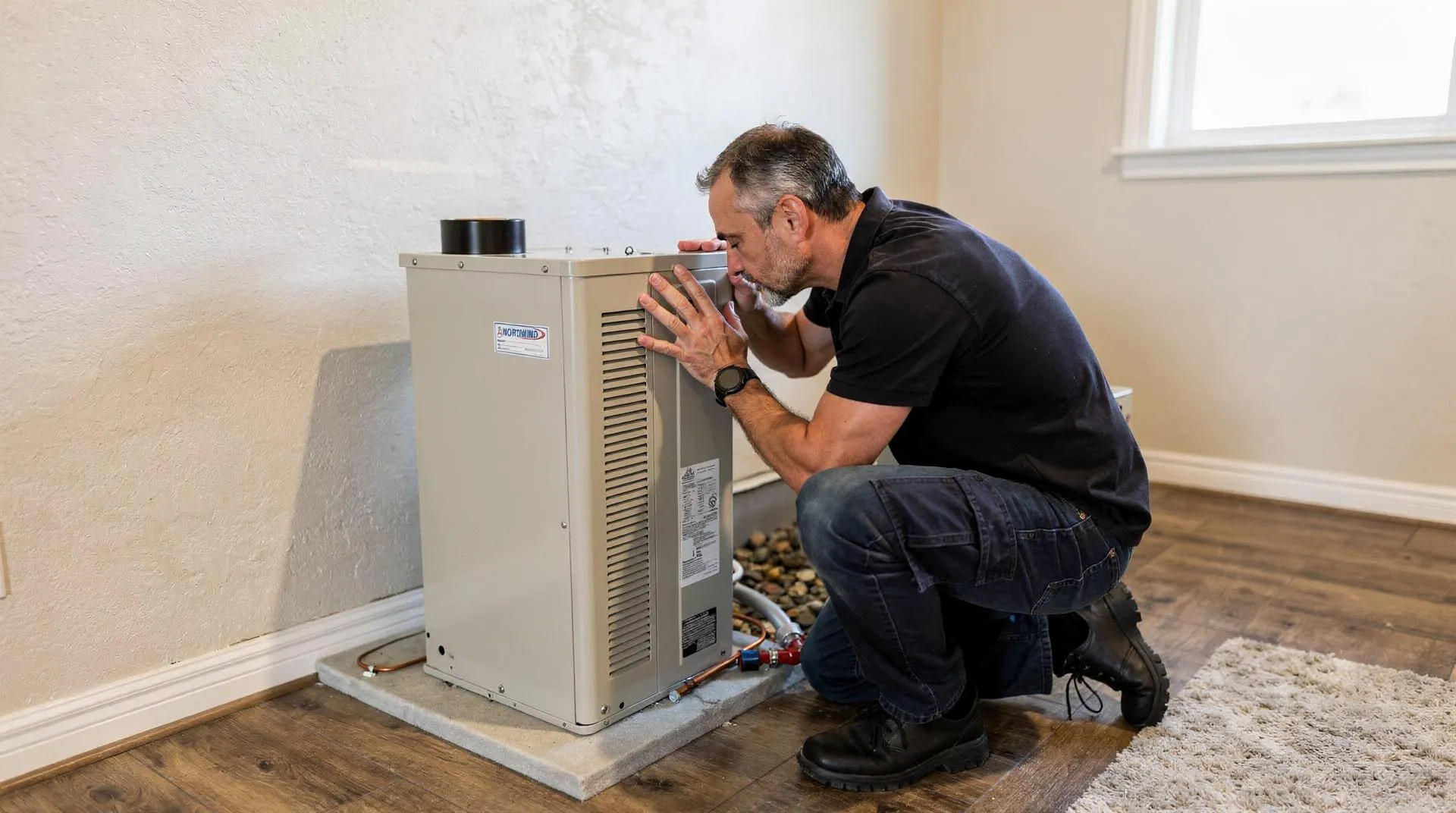
Noises fall into two distinct categories: those originating in the duct system, and those coming from the furnace or air conditioning unit itself. Pinpointing the source before calling for service saves time and helps our team at Northwind Heating, Cooling & Fireplace Showroom arrive fully prepared to resolve the problem. A **furnace banging** sound, for example, points to a very different root cause than a rattle traveling through supply ducts, so location matters from the very first moment you hear it.
### What Should You Have Ready Before the Inspection?
Prepare the following before our team assesses the system:
1. **Note the noise type** — banging, rattling, squealing, or humming. The more precisely you can describe the sound, the faster we can narrow down the likely cause.
2. **Record when it occurs** — at startup, during operation, or at shutdown. Timing is one of the strongest clues our team uses to identify the source of the problem.
3. **Identify the location** — duct system, furnace cabinet, or outdoor air conditioning unit. Walking through your home while the system runs helps isolate which area is generating the noise.
4. **Document an AC rattling sound** separately from any furnace-related noise, since the two units require different diagnostic approaches. Keeping these observations distinct helps our team arrive with the right tools and knowledge.
5. **Confirm system age and last service date** so our experienced team can cross-reference known failure patterns. Older systems or those past their last service window often show predictable wear patterns that guide diagnosis.
Having this information ready allows Northwind Heating, Cooling & Fireplace Showroom to move directly into accurate diagnosis — no guesswork, no wasted time, and no unnecessary delays in getting your system back to normal.

## How Do You Assess and Identify Noise Patterns?
Assessing **HVAC noises** starts with recognizing that every unusual sound is an early indicator of a mechanical or electrical issue. Catching these patterns before problems escalate protects both your indoor comfort and the long-term health of your equipment.
Many homeowners in Surrey, BC miss warning signs simply because they are unfamiliar with how their system's components sound under normal operation — and that gap in awareness can be costly. At Northwind Heating, Cooling & Fireplace Showroom, our experienced team has seen firsthand how early identification makes the difference between a minor service call and a major system failure that could have been avoided entirely.
### What Should You Do Before Calling a Professional?
Before contacting our team, take a few minutes to document what you are hearing. Note when the noise occurs — at startup, during operation, or at shutdown — and record where the sound seems to originate, whether from the air handler, the outdoor unit, or the ductwork.
Follow these steps to assess noise patterns effectively:
1. **Listen during a full operating cycle** — startup, steady-state, and shutdown — to determine exactly when the sound appears. Sounds that occur only at startup, for example, point to ignition or pressure-related causes rather than mechanical wear.
2. **Locate the source** by moving through your home and identifying whether the noise comes from the indoor unit, outdoor unit, or duct system. Standing near each component while the system runs gives you a clear directional sense of where the issue originates.
3. **Describe the sound type** — a **furnace banging** at ignition differs entirely from a persistent **AC rattling sound** at the outdoor condenser. Precision in your description helps our team at Northwind Heating, Cooling & Fireplace Showroom prepare the right diagnostic approach before we even arrive.
4. **Check for changes in frequency or volume** over several days, as escalating noise signals a worsening condition. A sound that grows louder or more frequent is a clear indicator that the underlying issue is progressing.
5. **Document your findings** in writing or with a short audio recording to share with our team. A recording is especially helpful for intermittent sounds that may not be present at the time of our visit.
### Why Do Noise Patterns Matter for Diagnosis?
Different sounds point to different failure modes — a banging noise at furnace startup often signals a delayed ignition issue, while a rattling from the air conditioning unit typically points to loose mechanical components. Matching the pattern to the source allows our team at Northwind Heating, Cooling & Fireplace Showroom to diagnose accurately and resolve the issue efficiently, so you are not waiting through multiple visits to find the real answer.

## What Does a Banging or Booming Sound Mean?
**HVAC noises** that bang or boom are diagnosable issues requiring prompt attention — not sounds to ignore until the next scheduled service visit. Percussive noises coming from a home's heating or cooling equipment are almost always signs of trouble with a furnace or air conditioner, and they rarely resolve on their own.
A banging sound left unaddressed allows a minor mechanical fault to escalate into a full system failure, leaving your home without heat or cooling at the worst possible moment. We encourage homeowners in Surrey, BC to reach out to Northwind Heating, Cooling & Fireplace Showroom at the first sign of these sounds rather than waiting to see if the problem goes away.
### What Causes a Furnace to Make a Banging Noise?
**Furnace banging** most commonly occurs when delayed ignition allows gas to accumulate before it finally ignites — producing a small but forceful explosion inside the heat exchanger. A loose or disconnected component inside the blower assembly also generates sharp, repetitive banging as parts strike the housing during operation, and both causes demand immediate inspection by a qualified professional.
### How Do You Diagnose and Address a Banging HVAC Sound?
Before calling for service, follow these steps to document the issue accurately:
1. **Note when the sound occurs.** Determine whether the bang happens at startup, during operation, or at shutdown — this narrows the likely cause significantly and gives our team a precise starting point. A bang at startup almost always points to ignition or pressure issues, while one during operation suggests a mechanical component is loose or failing.
2. **Identify the location.** Stand near the furnace, then near the air handler, and pinpoint where the noise originates. Moving between these two points while the system runs often makes it immediately clear which component is the source.
3. **Check for visible loose panels.** Inspect the exterior cabinet for unsecured access panels that vibrate against the unit body. A loose panel is one of the simplest fixes, but it can generate a surprisingly loud bang that mimics more serious problems.
4. **Turn the system off.** If the banging is loud, sharp, or accompanied by a smell, shut the system down and contact our team at Northwind Heating, Cooling & Fireplace Showroom immediately. These combinations of symptoms can indicate a safety issue that should not be left running.
5. **Record the pattern.** Note frequency and duration so our service professionals can diagnose the fault efficiently on arrival. The more detail you can provide, the faster we can get your system back to safe, quiet operation.
Our approach at Northwind Heating, Cooling & Fireplace Showroom since 1989 has been built on integrity and a "do it right the first time" philosophy — our experienced service professionals resolve the root cause, not just the symptom, so the same problem does not return.
## What Causes Rattling, Squealing, or Ghostly Sounds?
**HVAC noises** are direct signals that something is wrong with your heating and cooling equipment — not background noise to ignore. Unaddressed sounds escalate from minor mechanical issues into serious problems that threaten both your comfort and your safety, and we have seen that pattern repeat consistently throughout our 35 years serving Surrey, BC homeowners.
Every HVAC system is built from multiple components, each capable of producing its own distinct sound signature under pressure, heat, and mechanical stress. When any one of those components begins to fail or shift out of alignment, the system communicates that stress through sound — and catching those sounds early is the difference between a straightforward service call and a costly emergency repair that could have been avoided entirely.
### Why Does a Furnace Make a Banging Noise?
**Furnace banging** is one of the most alarming sounds a homeowner encounters, and the most common cause is delayed ignition — gas accumulates in the combustion chamber before igniting, producing a sharp bang or boom. Loose panels, expanding metal ductwork, and worn internal components also generate percussive sounds that travel through the entire system and are often mistaken for a single, isolated problem.
### What Causes an AC Rattling Sound?
An **AC rattling sound** typically points to loose hardware, debris inside the unit, or components that have shifted out of their mounting positions. Air conditioning systems contain fans, motors, and refrigerant lines that vibrate during normal operation, and when fasteners loosen or foreign material enters the cabinet, that vibration amplifies into a persistent rattle that grows worse over time without intervention.
Here is a quick reference for the most common noise types and their likely sources:
| Noise Type | Likely Source | Urgency |
| --- | --- | --- |
| Banging / Booming | Delayed ignition, loose panels | High — act promptly |
| Rattling | Loose hardware, debris in unit | Moderate — inspect soon |
| Squealing | Worn belts, dry bearings | Moderate — schedule service |
| Ghostly / Whistling | Duct leaks, restricted airflow | Low to moderate |
Our expert team at Northwind Heating, Cooling & Fireplace Showroom services heating systems, air conditioning, heat pumps, and ductless units — covering every component that produces these warning sounds. When strange noises appear, we diagnose the root cause accurately and resolve it with quality workmanship the first time.
## How Do You Inspect Key HVAC Components?
Inspecting key components is the most critical step in diagnosing **HVAC noises** before they escalate into costly system failures. A structured component inspection reveals the root cause behind sounds that range from a persistent **furnace banging** to a sudden **AC rattling sound**, and it gives our team at Northwind Heating, Cooling & Fireplace Showroom a clear picture of what needs to be addressed when we arrive.
Before beginning, turn off power to the unit at the breaker — never inspect a live system. Gather a flashlight, a screwdriver, and a clean replacement filter before starting so you can move through the steps without interruption.
Follow these steps in order:
1. **Check the air filter first.** A clogged filter restricts airflow and forces components to strain, producing low rumbling or whistling sounds. Replace the filter if it appears gray or visibly blocked, as this single step resolves a surprising number of noise complaints entirely.
2. **Inspect the blower compartment.** Open the access panel and look for loose screws, debris, or a fan blade that has shifted out of alignment. A rattling blower wheel is one of the most common sources of an AC rattling sound and is often visible with a basic inspection.
3. **Examine the furnace burner area.** Look for delayed ignition signs — carbon buildup or uneven flame color. Delayed ignition is the leading cause of furnace banging at startup and should always be assessed by our team at Northwind Heating, Cooling & Fireplace Showroom rather than left to worsen.
4. **Check all accessible ductwork connections.** Loose duct joints expand and contract with temperature changes, producing banging or popping sounds throughout the home. Securing these connections with foil tape is a straightforward fix that can eliminate noise across multiple rooms at once.
5. **Inspect the outdoor condenser unit.** Remove any debris from around the cabinet and check that the fan blades spin freely without wobbling. Debris accumulation is especially common during Surrey, BC's seasonal transitions, and even a small obstruction can generate significant noise.
### What Causes a Furnace Banging Sound at Startup?
Furnace banging at startup almost always points to delayed ignition in the burner chamber — gas accumulates briefly before igniting, and the resulting small pressure burst produces that sharp bang. This condition warrants prompt professional attention and should never be left to continue, as repeated pressure bursts can damage the heat exchanger over time.
### When Should a Professional Inspect HVAC Noises?
Some component issues go beyond a visual check, and that is where our team at Northwind Heating, Cooling & Fireplace Showroom steps in. We deliver reliable solutions with [same-day service](/contact) and honest, upfront communication so unusual sounds get diagnosed accurately the first time — and we also provide indoor air quality assessments and advanced filtration solutions to address the full picture of your home's comfort system.
## How Do You Tighten Parts and Secure Loose Panels?
Tightening loose parts and securing panels is a proven step in resolving noisy HVAC operation, and it is one of the first things our team at Northwind Heating, Cooling & Fireplace Showroom checks during any noise complaint visit. Loose hardware — screws, bolts, and access panels — vibrates under normal system pressure, generating an **AC rattling sound** and other disruptive **HVAC noises** that worsen over time if left unaddressed.
Before beginning, power down the system completely at the thermostat and the breaker — never work on live HVAC equipment. Having a standard Phillips and flathead screwdriver on hand before you start means you can move through each step without stopping.
**Follow these steps in order:**
1. **Locate the access panels** on the air handler, furnace cabinet, and outdoor condenser unit. Identifying all panel locations first gives you a complete picture of where vibration may be occurring before you start tightening anything.
2. **Press firmly on each panel** to identify which ones flex or rattle when pressure is applied. A panel that moves noticeably under light pressure is almost certainly contributing to the noise you are hearing.
3. **Tighten every visible screw** along the panel edges using a standard Phillips or flathead screwdriver — do not overtighten, as stripped screws lose their grip and create a new problem in place of the old one.
4. **Inspect interior mounting brackets** for the blower motor and fan assembly, tightening any loose fasteners you can safely reach. These brackets bear the vibration load of the motor directly, so even minor looseness here can generate significant noise during operation.
5. **Check the ductwork connections** at the air handler collar, pressing sheet-metal seams together and securing them with foil tape if they have separated. Duct leaks at the collar are a common source of whistling and rattling sounds that seem to come from everywhere at once.
6. **Restore power** and run the system for a full cycle to confirm the noise has resolved. If the sound persists after completing these steps, that is a clear signal to contact our team for a professional diagnosis.
### What Causes Panels to Come Loose Over Time?
Normal system vibration gradually backs out fasteners over months of operation, and **furnace banging** combined with pressure fluctuations inside the cabinet accelerates this process. Periodic hardware checks are a sound maintenance habit that our team at Northwind Heating, Cooling & Fireplace Showroom recommends as part of any routine seasonal service visit.
### When Should a Professional Inspect the System?
Some fasteners are located in areas that require specialized tools or knowledge to access safely, and attempting to reach them without the right equipment can create new issues. Our mission at Northwind Heating, Cooling & Fireplace Showroom has always been to ensure every client is completely satisfied — when a noise persists after these steps, we are ready to diagnose and resolve the underlying issue properly.
## When Should You Replace Belts or Filters?
Replacing worn belts or filters is a key step in resolving **HVAC noises** that persist after basic inspection, and it is one of the most impactful maintenance actions a Surrey, BC homeowner can take. Worn components left in place allow minor mechanical stress to escalate into full system failures that are far more disruptive and expensive to address than a timely replacement.
### How Do You Know a Belt or Filter Needs Replacing?
A squealing or high-pitched whine from the air handler often points directly to a deteriorating belt that is losing its grip on the pulley. Filters tell a different story — a clogged filter restricts airflow, forcing the blower motor to work harder and generating a low rumble or whistling sound that grows more persistent the longer the filter stays in place.
### What Happens If You Ignore a Worn Belt or Filter?
A snapped belt shuts down airflow entirely, leaving your home without conditioned air until the part is replaced. A severely clogged filter can cause the heat exchanger to overheat, triggering safety shutoffs and, in serious cases, permanent component damage that a simple filter swap could have prevented.
Follow these steps to replace belts or filters correctly:
1. **Power down the system completely** at the thermostat and the breaker before opening any access panel. Working on a fully de-energized system is the single most important safety step before any hands-on maintenance.
2. **Locate the air filter compartment** — typically found at the return air duct or inside the air handler cabinet — and remove the existing filter. Note the direction of airflow marked on the frame before pulling it out so you can orient the replacement correctly.
3. **Inspect the filter** for heavy dust buildup, discoloration, or visible debris that blocks airflow. A filter that looks gray or matted has already been restricting your system's performance and should be replaced immediately.
4. **Insert a replacement filter** of the correct size and MERV rating, ensuring the airflow arrow on the frame points toward the blower. Using the right MERV rating matters — too high a rating can restrict airflow just as much as a dirty filter in some systems.
5. **Check the blower belt** for cracking, fraying, or glazing, and replace it if any of those signs are present. A belt showing any visible wear is already past its reliable service life and can snap without further warning.
6. **Restore power** and listen for a reduction in noise during the first full cycle. A quieter, smoother startup after replacement confirms the belt or filter was the source of the problem.
Many of these steps are straightforward for attentive homeowners, but if **furnace banging** or an **AC rattling sound** continues after belt and filter replacement, professional assessment is the right next move. Our team at Northwind Heating, Cooling & Fireplace Showroom offers an [ongoing maintenance plan](/plans) that keeps your system ahead of issues before they become costly repairs — a practical investment in long-term home comfort.
## How Do You Confirm the Fix and Prevent Recurrence?
Confirming a repair means running the system through a full operational test after every fix — not simply assuming the noise has stopped. Skipping this final verification step leaves unresolved **HVAC noises** undetected and allows minor mechanical issues to compound into major failures over time, undoing all the work that went into the repair.
### What Does a Post-Repair System Test Actually Involve?
Testing system operation is the definitive final step in any noisy HVAC troubleshooting process, and it is something our team at Northwind Heating, Cooling & Fireplace Showroom performs on every service visit before we consider a job complete. Run the system through a complete heating and cooling cycle, listening at each register and near the air handler for any remaining sounds — pay close attention to the startup sequence, as that is when **furnace banging** and compressor stress are most audible.
Follow these steps in order once a repair is complete:
1. **Restore power** to the system fully before testing — partial power states produce misleading results and can make it appear a noise is gone when it has simply not had the conditions to appear yet.
2. **Set the thermostat** to trigger both heating and cooling modes, cycling through each for at least five minutes. Running both modes confirms that the fix addresses the system as a whole, not just one operating condition.
3. **Listen at the unit and at the registers** for any **AC rattling sound**, grinding, or intermittent banging that persists. A sound that was present before but is gone after the repair is your confirmation that the fix was successful.
4. **Check airflow volume** at each vent — reduced flow alongside noise often signals a secondary issue still present. Weak airflow paired with any remaining sound is a clear reason to contact our team for further investigation.
5. **Log the results** with a date and description so future service visits have a clear baseline for comparison. Keeping a simple written record of your system's behavior over time is one of the most useful things a homeowner can do to support accurate diagnostics.
### How Do You Keep the Problem From Coming Back?
Prevention is built on [scheduled maintenance](/promotions), not reactive repairs — heat pumps, furnaces, and air conditioning systems all benefit from routine professional care that protects long-term performance and reduces the likelihood of noise-related breakdowns returning. At Northwind Heating, Cooling & Fireplace Showroom, our approach has been grounded in a "do it right the first time" philosophy since 1989, and that commitment is why our clients in Surrey, BC consistently refer their friends, neighbors, and families to us for all their heating and cooling needs.
## FAQ
### What types of noises indicate an HVAC problem?
Banging, rattling, squealing, and hissing all signal mechanical or electrical issues that worsen without prompt attention. If you are hearing any of these sounds from your system, contacting our team at Northwind Heating, Cooling & Fireplace Showroom early gives you the best chance of resolving the problem before it becomes a costly repair.
### How does Northwind Heating, Cooling & Fireplace Showroom's maintenance plan help with noise prevention?
Our maintenance plan provides regular professional inspections that catch the early signs of wear — loose components, deteriorating belts, and restricted airflow — before they develop into the noises that signal a bigger problem. Homeowners in Surrey, BC who stay on a regular maintenance schedule with us consistently experience fewer unexpected breakdowns and longer equipment lifespans.
### How long has Northwind Heating, Cooling & Fireplace Showroom been diagnosing HVAC noises?
We have been serving Surrey, BC homeowners for over 35 years, providing heating and cooling solutions since 1989. That depth of experience means our team has encountered virtually every noise pattern an HVAC system can produce — and we know exactly how to resolve it correctly the first time.
## Ready to Silence Those HVAC Noises? Let's Talk.
If your system is banging, rattling, or squealing, do not wait for the problem to grow — our team at Northwind Heating, Cooling & Fireplace Showroom is ready to diagnose and resolve the root cause with the same integrity and craftsmanship we have brought to every job since 1989. Surrey, BC homeowners trust us because we show up prepared, communicate honestly, and make sure the fix lasts. [Reach out to us today](/contact) and let us restore your home's comfort and quiet.
Other Blog Posts
Customer Testimonials
Go With Experience

I cannot recommend this company enough. We were horribly jerked around by Angels Heating and Cooling. Northwind took the time to answer all our questions, we're professional, timely, affordable and sent a great technician to fix our gas fireplace.
We had a duel fuel system installed by Northwind. Our experience from installation to post installation service has been amazing.
Our fireplace had not been working. This was the only company that was willing to come out. Wes the technician was great. Diagnosed the problem and fixed it. Spoke to Deanna on the phone. She has awesome customer service skills. I would use them again and highly recommend them.
A+ Customer Service! We had a minor issue and they stopped by right away. We've used them on residential and commercial buildings and they are always on top of everything. Thank you to Chris as well!
We purchased and had Nothwind install a Valor gas fireplace for us. They did an excellent job. We did have a problem with the remote control that came with the unit but were very happy with the immediate response and repair from Northwind for warranty work.
I’ve been in the construction business for many years and the Northwind HVAC crew for sure rank up there in the number one spot. Without exception, all the work was carried out swftly, with journeyman style and with a friendly contractor/client relationship.
Home
Blogs
Latest Blog Posts